This was the first installation in the Museum of Human Violence. It focused on cruelty in the home, and is part of a larger Gallery planned around violence in food systems more generally. Of course, as in Society widely, no products used in the installation involve exploiting or using nonhumans – the film (see at the end) shown as part of the installation is archival footage from 2023.
Pre-Rupture many humans ate the flesh and excretions of other animals, and this was normal in cultures all over the world. There existed people who called themselves ‘vegan’ or ‘plant based’ who did not eat flesh or excretions but they were in a small (albeit growing) minority pre-Rupture. This expansion of a plant based diet was in part driven by concerns about the climate, with increased awareness and understanding of the contribution to global warming from animal agriculture; a small change in opinion was evident. For example in the mid-20s local councils in the UK began to serve only plant based food at their council functions. And a growing number of Universities were turning toward plant-based only foods in their on-site canteens. (However, plant based eating did not necessarily extend to ending other violent practices toward the nonhuman).
Still most families ate ‘meat’ and the flesh from a whole variety of farmed and non farmed birds and animals was readily available in high street supermarkets and specialist shops, called ‘butchers’ (‘to butcher’ – to slaughter and cut up. From Old French – “bouchier”, from “bouc” meaning male goat ), and ‘Fishmongers’. (Monger was based on the Latin – mango: ‘to deal in’).
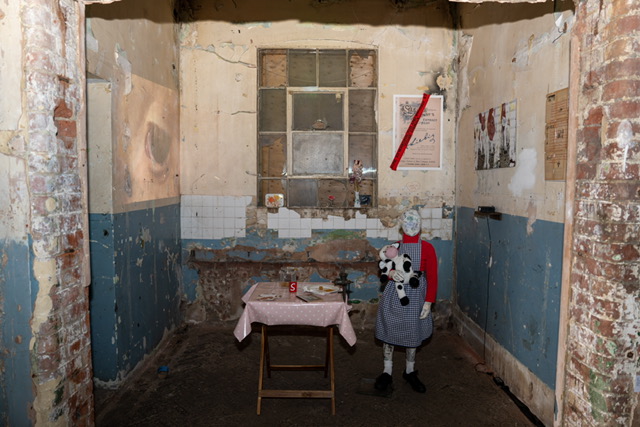
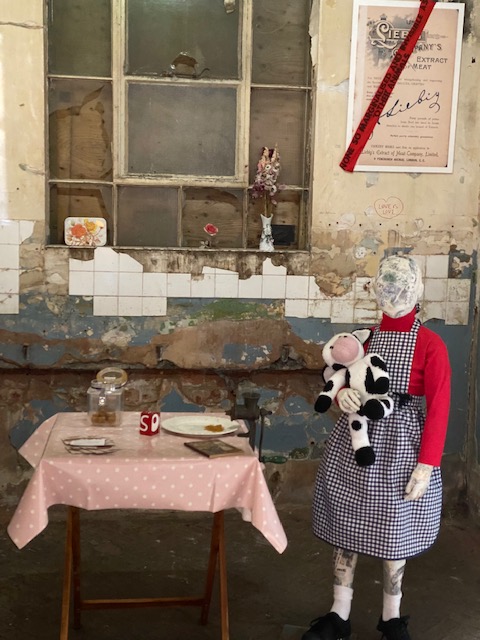
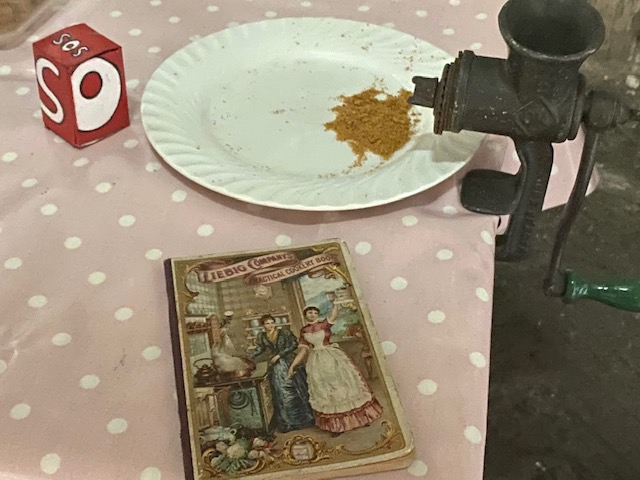
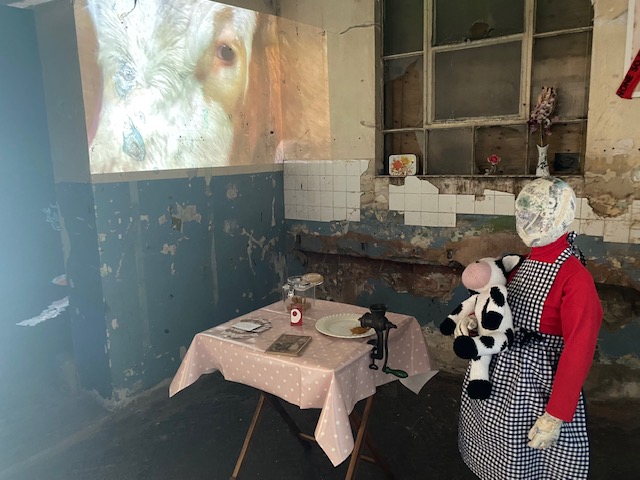
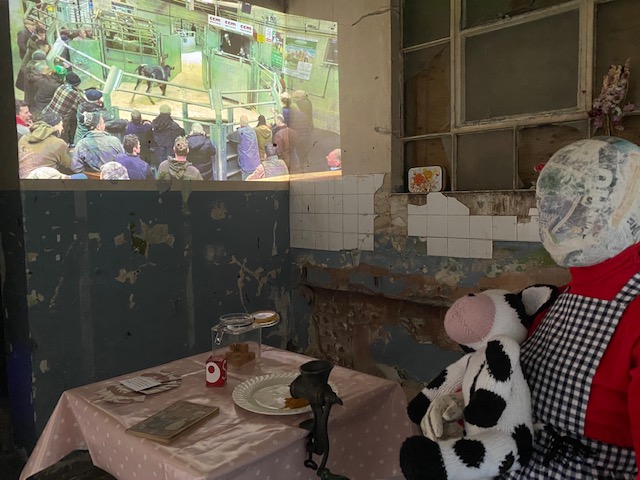
This installation drew attention to the kitchen, and a child learning ‘normal’ cruelty. The invisibility of the nonhuman was highlighted through archival video of very young cattle (9-10 months) being sold for slaughter in the 2020s. As with all Museum exhibitions, no animal products were used in the making, and the ‘Oxo’ cubes were plant based. The ‘mincer’ is an antique violent tool that was used to cut animal flesh into even smaller parts. The books on the table are recipe books – instructions on how to cook ‘ flesh’. (see the gallery on tools and language for related discussion).
Two different iterations of this installation were made – the second originally for a specific site in London where animal parts were stored prior to being made into the OXO cubes – a powder made from animal flesh that was mixed with water to make ‘stock’ to add ‘flavour’ to ‘food’.
As with other installations, these too included gallery ‘maps’, posters and information booklets – the latter being free to take away. see below.
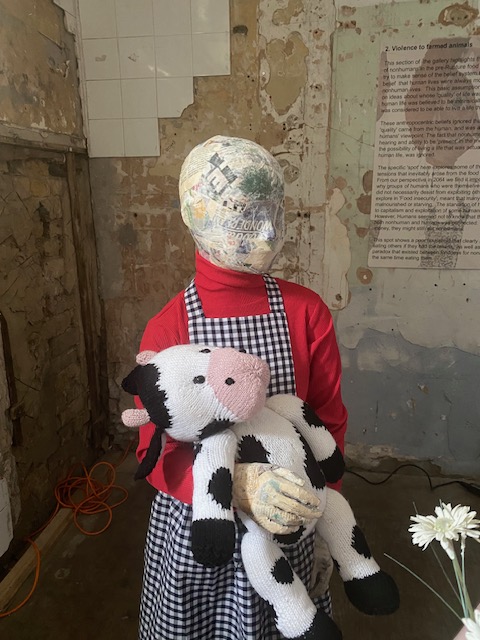
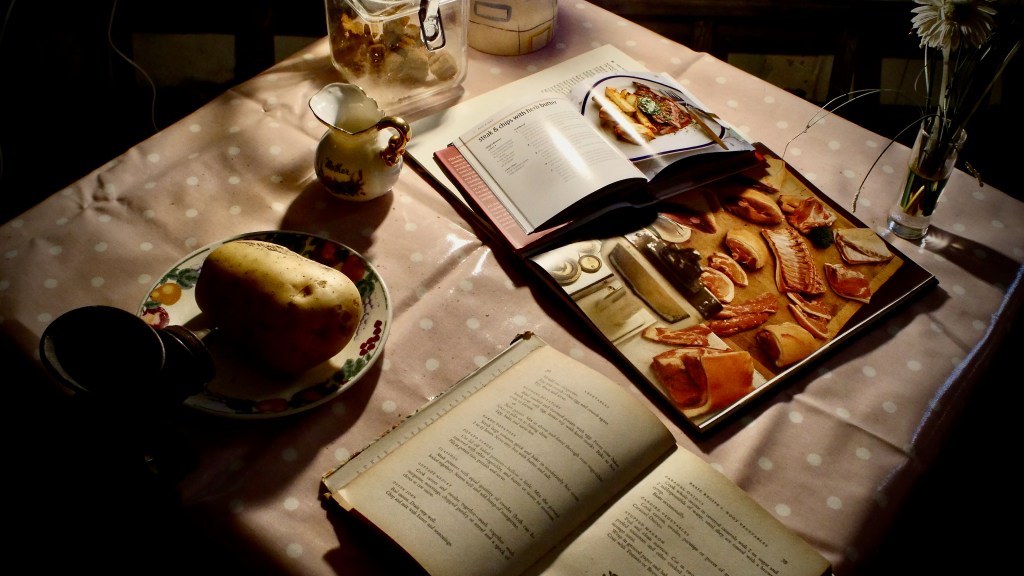
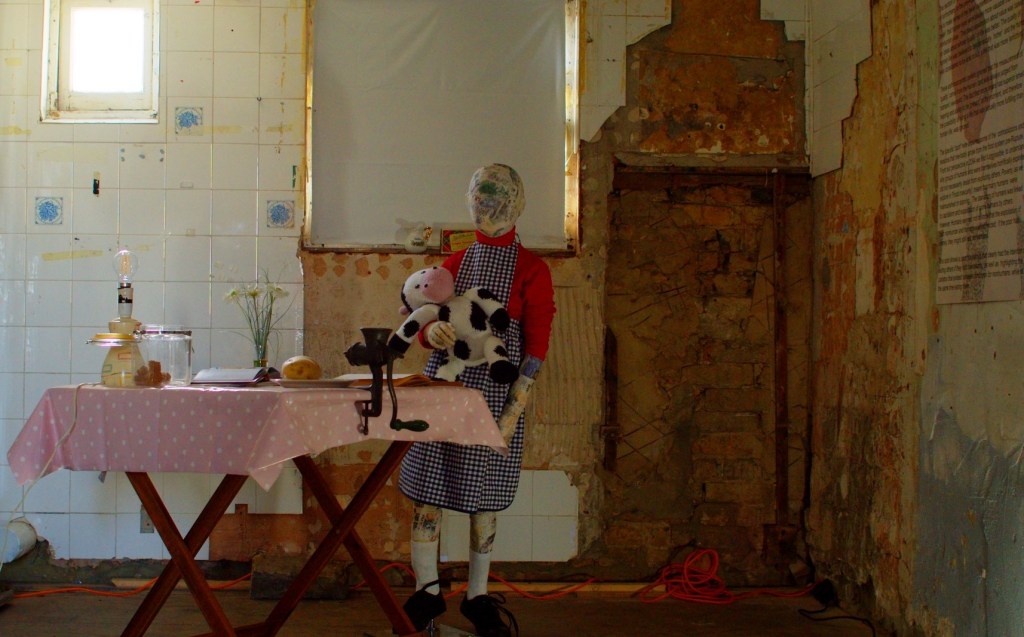

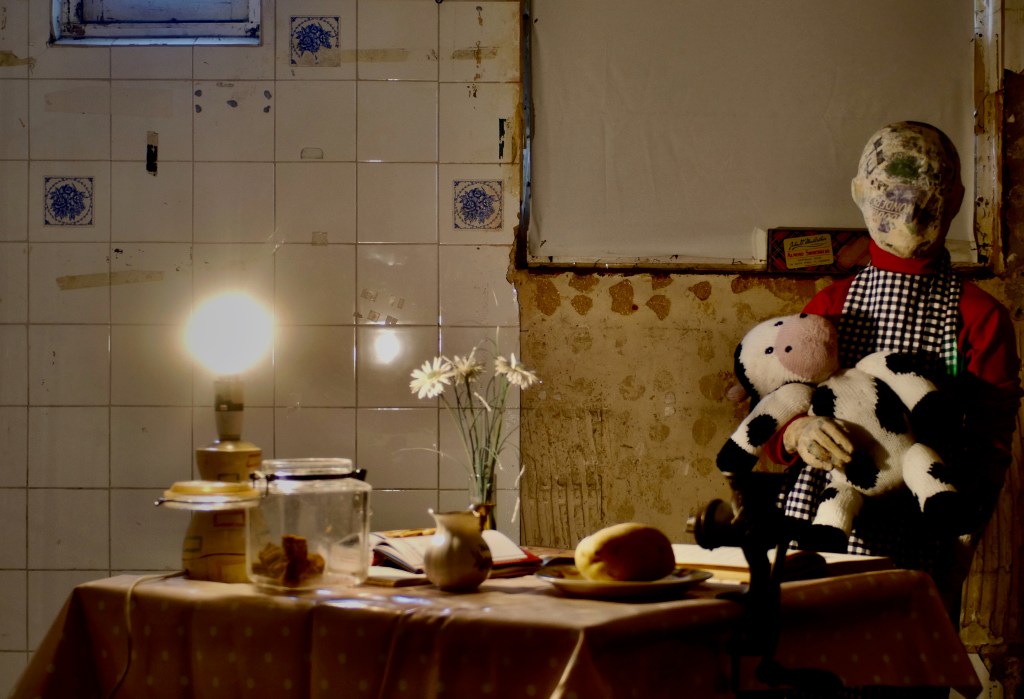
Earlier site specific iteration of the ‘learning violence: home’ installation.


Below is a longer version of the same video with the market scenes kept in. This is a distressing watch.


 THE MUSEUM OF HUMAN VIOLENCE